Oct.27, 2026
Industrial valves do not have a single reliable lifespan that applies across all applications. Their useful life depends on design, materials, operating conditions, cycle frequency, and maintenance history. Before estimating the remaining life of an asset, identify how the industrial valve works and the duty it performs. At KAIWEI VALVE, we recommend a practical assessment process: identify the valve and its duty, review operating history, inspect critical components, and set a risk-based maintenance or replacement plan. The steps below help you make that assessment without treating age alone as a guarantee of continued service.
There is no universal service-life limit for an industrial valve. Abrasive, corrosive, high-cycle, or high-temperature service can require earlier intervention than less demanding service. A numerical life estimate is useful only when it is supported by the specific valve’s documentation or operating records from comparable equipment and conditions. Neither a generic age range nor an apparently sound exterior establishes remaining life.
The pressure boundary may remain sound while soft seats, packing, bearings, stem surfaces, or actuators wear out first. In practice, component condition and leakage performance often determine whether the valve needs repair before the body reaches the end of its useful life. Calendar age, accumulated cycles, and time since the last overhaul should therefore be recorded separately.
The following table highlights assessment priorities for several common industrial valve types. It is not a service-life ranking or a replacement schedule.
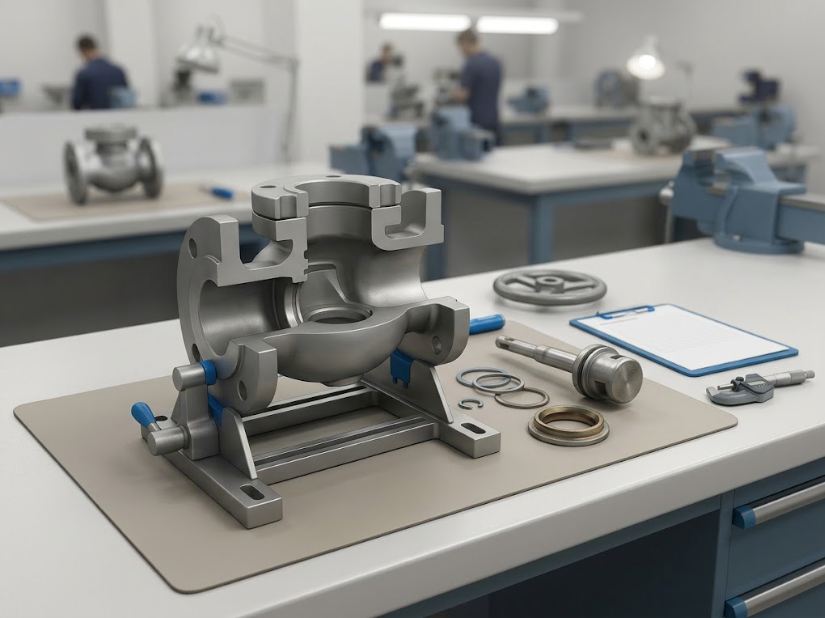
Industrial valve body, removed trim, and sealing components
| Valve type or component | Indicative planning range | Common life-limiting factors |
|---|---|---|
| Ball valve | About 10–20 years in suitable service | Seat wear, solids, frequent cycling, seal degradation |
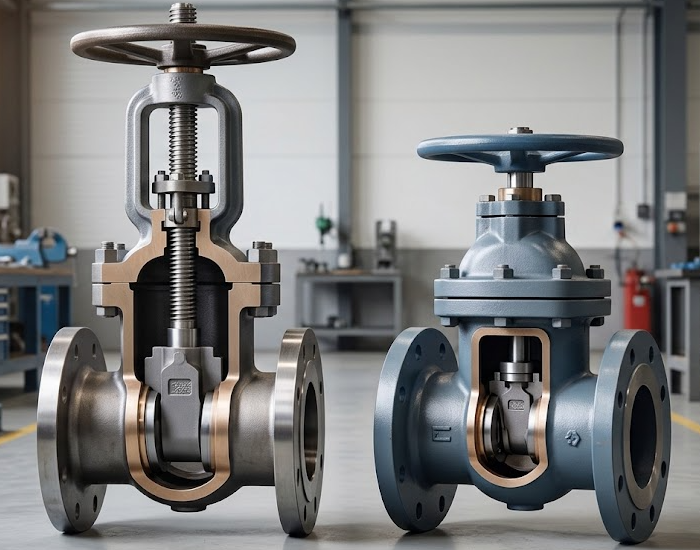
| Gate valve | About 15–30 years in suitable service | Corrosion, infrequent operation, stem or wedge damage |
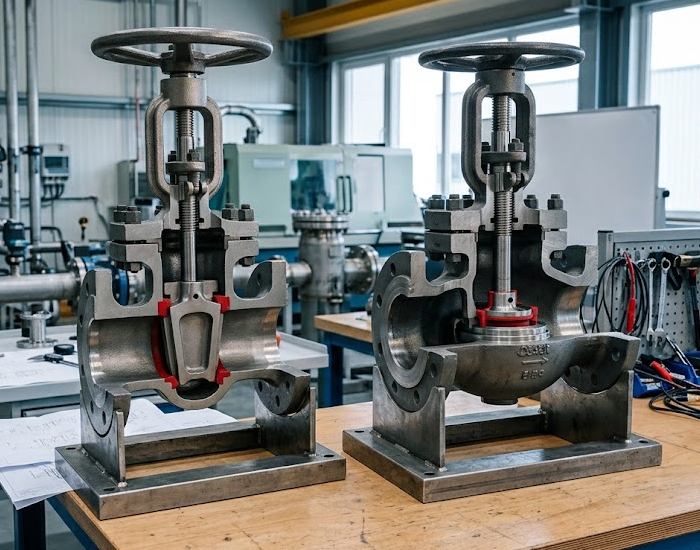
| Globe valve | About 10–20 years in suitable service | Throttling erosion, cavitation, vibration, trim wear |
| Butterfly valve | About 10–20 years in suitable service | Disc and liner wear, chemical attack, cycling frequency |
| Actuator and accessories | Assess separately from the valve body | Cycle count, air or power quality, environmental exposure |
Actual results vary by design, materials, size, maintenance, and process conditions. Use the valve manufacturer’s documentation and your site’s inspection history to refine these ranges.
Pressure, temperature, fluid chemistry, and flow velocity all affect wear. Corrosion can thin pressure-retaining parts, while erosion from entrained solids can damage the body, seat, or trim. Cavitation and flashing can rapidly degrade a control valve’s internal components. Confirm that body, trim, seat, gasket, and packing materials are compatible with the actual process fluid and its operating envelope.
A valve used for frequent modulating service experiences a different duty cycle from an isolation valve that moves only during shutdowns. Understanding the difference between on-off and control valves helps determine whether the installed valve matches the task. Record cycle count where available and check whether the valve is being used for throttling when it was designed for on-off service. Incorrect duty can accelerate seat leakage, stem wear, and actuator failure.
Pipe strain, misalignment, incorrect torque, contaminated instrument air, and poor lubrication can all reduce service life. Over-tightening packing may increase operating torque and score the stem. A maintenance program should follow the valve manual, process risk, and site procedures rather than relying on a fixed calendar alone.
1.Build an accurate valve record. Capture the tag number, manufacturer, model, size, pressure class, body and trim materials, connection type, actuator details, installation date, and service history. Compare the nameplate and datasheet with the plant asset register. The industrial valve selection checklist can help identify missing service and specification data.
2. Define the operating envelope. Record normal and peak pressure and temperature, fluid composition, solids content, cycle frequency, and whether the valve isolates or modulates. Flag excursions beyond the design conditions for engineering review.
3. Inspect for condition indicators. Look for external leakage, corrosion, coating damage, unusual vibration or noise, difficult operation, positioner faults, and changes in travel time. Compare these observations with common industrial valve failures and warning signs to organize the investigation, rather than diagnosing from one symptom alone. Where the procedure permits, assess seat leakage and actuator response using approved methods.
4.Compare findings with acceptance criteria. Use the manufacturer’s limits, applicable piping and plant requirements, and project specifications. API 598 and ISO 5208 address pressure testing and leakage testing for relevant valve types; confirm the applicable scope and edition before using either. ASTM material specifications and DIN dimensional standards may also apply to particular components or projects, but they do not by themselves establish a universal service-life limit.
5.Choose repair, continued monitoring, or replacement. Repair may be appropriate when the body is sound and wear parts are replaceable. Replace the valve when pressure-boundary integrity is uncertain, damage is extensive, the design no longer fits the duty, or repeated repairs are uneconomic. Document the rationale and schedule the next inspection according to risk.
We suggest starting with a baseline inspection and then setting intervals according to consequence of failure, service severity, and observed condition. A low-risk utility valve may need a different inspection frequency from a critical isolation valve in hazardous service. As a starting point—not a universal rule—operators can log visible condition during routine rounds, review critical-valve performance at planned maintenance intervals, and have qualified personnel perform detailed examinations during scheduled outages.
Use suitable calibrated instruments and the approved test procedure. For example, a dimensional check may require measurement to 0.01 mm when the drawing tolerance and instrument capability call for it; that precision is not appropriate or necessary for every inspection. Pressure testing must be performed by competent personnel under an approved procedure, with the correct test medium and safeguards. Never exceed the valve’s permitted test limits or the applicable system requirements.
Repairing a poor material or design match: Repeated seat or trim failure may indicate an incorrect material selection or unsuitable valve type. Review fluid chemistry, pressure drop, velocity, and duty with a qualified engineer before ordering replacement parts. Understanding how valve size affects pressure drop helps explain why matching nominal pipe size alone is not a sufficient replacement specification.
A CMMS or asset-management system can centralize valve datasheets, work orders, cycle counts, test results, and repair costs. Add condition-monitoring data from positioners or actuators where available. A calibrated pressure gauge, approved leak-detection method, suitable dimensional instruments, and the manufacturer’s maintenance manual help technicians collect consistent evidence.
For procurement or replacement, provide KAIWEI VALVE or another qualified supplier with the tag data, process conditions, material requirements, connection details, required standards, and actuator specification. When discussing valve service and technical support, also include inspection findings and repair history, and confirm the available scope for the specific equipment. Clear information reduces the risk of selecting a replacement that fits the pipeline but not the service.
A documented valve-life assessment helps maintenance teams avoid both premature replacement and unplanned failure. It can support spare-parts planning, reduce emergency work, protect process availability, and prioritize inspection budgets. Let documented operating data and condition findings guide each asset decision. If the site uses an age-based budgeting assumption, identify its source and limitations, and keep it separate from permission to continue operating a particular valve.
How long do industrial valves typically last? The most useful answer comes from your valve’s materials, duty, and inspection history—not its age alone. Start by confirming the valve tag and service conditions, reviewing the last maintenance record, inspecting for leakage and abnormal operation, and setting a risk-based follow-up. This process gives your team a documented basis for a repair-or-replace decision.
For a replacement-valve inquiry, send the existing valve’s model and size, pressure and temperature range, medium, cycle frequency, connection details, leakage requirements, and inspection findings to KAIWEI VALVE. Request model-specific documentation and a technical review or project quotation rather than relying on a generic lifespan figure.
More News