Nov.27, 2026
A gate valve may leak through its seat because debris prevents contact, the gate has not reached its intended closed position, the seating surfaces are worn or damaged, or the valve is unsuitable for the operating conditions. The symptom alone does not identify the cause. First establish whether the leakage is internal, then arrange a safe, model-specific assessment.
Seat leakage means fluid passes through the closed valve toward the downstream side. It is different from fluid escaping at the stem, bonnet joint or body. Understanding the gate valve mechanism helps separate these failure paths before ordering parts or changing the operating procedure.
A handwheel at its stop, a closed indication or an apparently quiet downstream line does not prove a safe maintenance boundary. Follow the site's approved isolation, hazardous-energy-control and work-permit procedures. A qualified team must address pressure, trapped fluid, temperature, actuators and the possibility of pressure returning.
Do not loosen a bonnet, packing gland, flange, drain fitting or other pressure-containing part to investigate leakage. Do not use a longer lever or excessive closing force as a general repair method. This article is an assessment framework, not permission to work on a live valve.
For symptoms that are not limited to the seat, compare the broader industrial valve failure warning signs before assuming every leak requires the same repair.
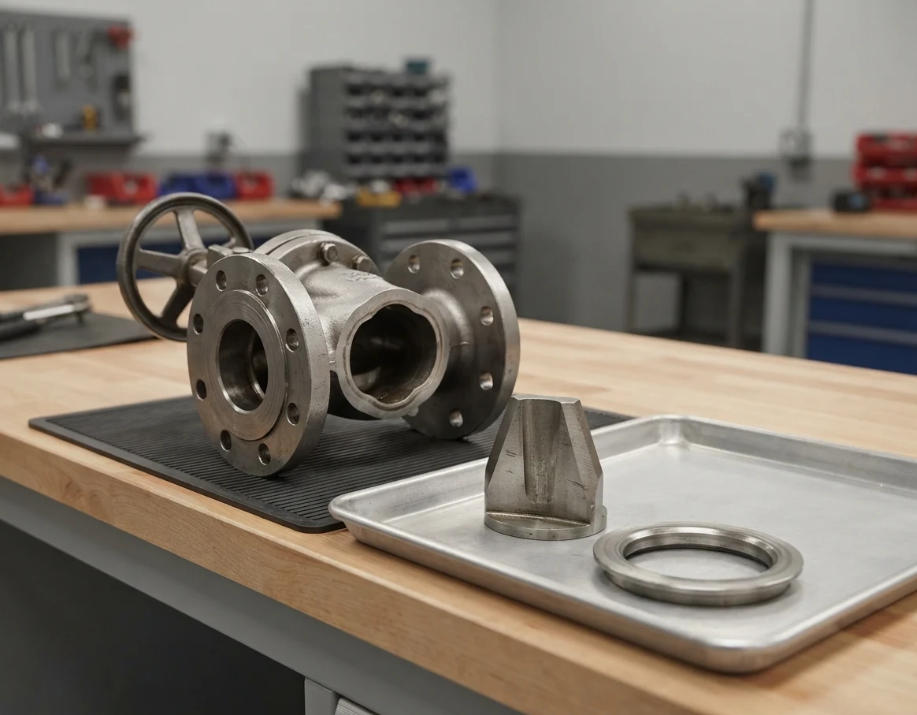
Scale, construction residue or process deposits can interrupt sealing contact. A valve that leaks after commissioning or a process upset may need a different investigation from one with gradual deterioration. Any cleaning or flushing method must be approved for the valve, fluid and system; repeatedly cycling it is not an automatic remedy.
An incorrect actuator limit, obstructed travel, a damaged drive connection or another mechanical issue may prevent intended gate travel. A control signal can indicate a commanded position without proving the gate has seated. Review records and manufacturer-approved indicators rather than forcing the operator past its designed limit.
A partly open gate can expose sealing areas to concentrated flow and vibration. If the valve has been used to regulate flow, investigate that operating history as well as the damaged parts. The explanation of why gate valves should not be used for routine throttling can help distinguish a maintenance problem from a recurring duty-selection problem.
Repeated operation, abrasive particles, incompatible materials or handling damage may change the condition of the gate and seats. A damaged surface can continue to leak even when the operator completes its travel. Replacing packing will not repair a damaged internal sealing surface.
Review valve material compatibility if the medium, concentration, cleaning chemicals or temperature has changed. Selecting a harder or more corrosion-resistant component without checking the complete design is not a reliable fix.
Temperature changes and differential pressure can affect seating and operating forces. The relevance depends on the wedge or disc arrangement and the actual construction. Do not diagnose thermal binding, pressure locking or a specific internal defect from a downstream pressure reading alone.
| Observation | Possible explanation | Review before deciding |
|---|---|---|
| Leakage after a recent shutdown | Debris, incomplete travel or changed process conditions | Operating history and approved closure indication |
| Leakage following throttling service | Seat or gate erosion | Duty history and isolated inspection findings |
| Increasing operating force | Mechanical damage, deposits or misalignment | Model-specific operating limits and qualified assessment |
| Leakage after temperature changes | Thermal effects or changed seating conditions | Temperature history, design and manufacturer guidance |
| Leakage despite verified travel | Damaged surfaces or unsuitable leakage expectation | Inspection results and agreed acceptance criteria |
These possibilities can overlap. For example, difficult operation and leakage might reflect deposits, damage, process conditions or an actuator issue. A repair decision needs more than a matching row in a troubleshooting table.
Collect the valve tag, manufacturer, model, size, pressure class, material identification and available drawings. Note the medium, upstream and downstream pressure, temperature, flow direction and whether the valve has a bypass or connected line that could affect the observation.
Record when leakage began, whether it is steady or intermittent, the most recent operation, actuator indications and any commissioning, temperature or process changes. Use the site's approved measurement method; noise, warmth or downstream pressure alone may have alternative explanations.
Where an inspection or leakage test is authorized, specify the medium, direction, pressure, duration and acceptance criteria. A field observation is not automatically equivalent to a factory seat test. A metal-seated valve also should not be judged against an undefined claim of absolute zero leakage.
Repair may be reasonable when inspection confirms a repairable defect, the pressure boundary is sound and the correct parts, procedures and qualified support are available. Replacement may be necessary where damage, traceability gaps or the condition of the assembly make repair unsuitable.
If the original duty is wrong, repairing the same configuration may repeat the failure. Revisit when a gate valve should be used and determine whether the task is isolation or sustained regulation. Request a documented recommendation rather than choosing from the product name alone.
Not necessarily. Excessive force can damage the stem, drive or seating parts. Follow the model's operating limits and obtain a qualified assessment.
Do not rely on suspected failed isolation. The site must determine and verify an appropriate safe isolation arrangement before work begins.
Packing addresses the stem sealing system, not the internal gate-to-seat interface. Confirm the leak path before selecting parts.
That depends on the design, damage, access and approved maintenance method. In-line access never means the valve can be opened while pressurized.
Share the nameplate, service conditions, leakage observations and available inspection findings with KAIWEI VALVE. Compare the relevant gate valve configurations, then request a technical review of a replacement or future specification. A recommendation should identify the proposed construction and remaining evidence gaps, not promise an unverified repair outcome.
More News
Nov.26, 2026
Nov.26, 2026
Nov.25, 2026


