News
Oct.19, 2026
Can a gate valve be used for throttling? A gate valve is designed mainly to start or stop flow, not to control it at changing rates. Gate valve flow control can seem simple because the gate can be left partly open. However, the shape of the opening can create a fast, uneven stream. That stream may cause vibration, erosion, or damage to the valve seat. Knowing how a gate valve works and how its operation differs from a control valve can help you avoid early repairs and unplanned downtime.
A gate valve should not normally be used for throttling. It is best used in the fully open or fully closed position. Leaving it partly open for regular flow control can cause vibration, noise, erosion, and seat or gate damage. Use a globe valve or a correctly sized control valve when you need to adjust flow often or hold a set flow rate.
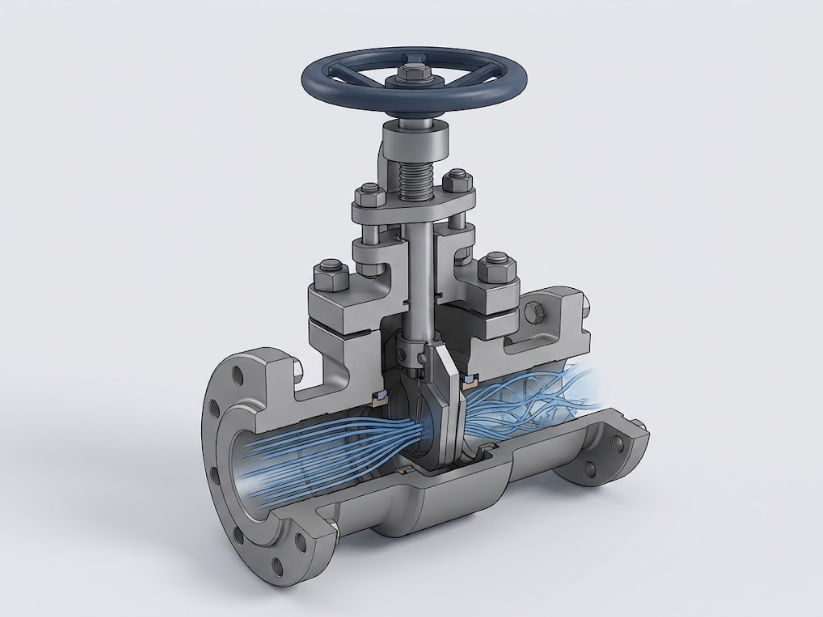
Cutaway illustration of a partly open gate valve
A gate valve opens when its gate lifts away from the flow path. It closes when the gate lowers into the path. In a fully open position, the gate moves clear of most of the bore. This design can provide a low-resistance path compared with a partly open position. In a fully closed position, the gate and seats stop flow, subject to the valve design and its specified leakage limits.
A rising stem gate valve shows the stem moving as the valve opens and closes. A non-rising stem design keeps the stem movement inside the valve body. A wedge gate valve uses a wedge-shaped gate to press against the seats when closed. A parallel slide gate valve uses parallel sealing faces. These designs have different construction details, but they are generally intended for isolation rather than continuous flow adjustment.
When the gate is only partly raised, flow squeezes through a restricted opening. The flow may speed up and become uneven around the gate and seats. The actual effect depends on the valve size, opening, fluid, pressure, and pipe system. A partly open gate can produce a concentrated jet that strikes internal surfaces. This can lead to metal loss, seat damage, noise, and vibration.
A large pressure drop across a partly open valve can also increase the risk of cavitation in liquid service. Cavitation happens when local pressure falls enough for vapor bubbles to form and then collapse as pressure rises. The collapse can damage nearby metal. The risk depends on the fluid and operating conditions, so a qualified engineer should check the pressure and flow data before selecting a valve.
There is no single opening percentage that makes every gate valve safe for throttling. A valve at 25 percent open may behave differently from another valve with a different bore, gate design, pressure, or fluid. Do not treat a partly open position as a reliable flow setting unless the manufacturer has approved that use for the exact valve and operating conditions.
The best valve depends on whether the job is isolation or ongoing flow adjustment. This comparison gives a general guide. Actual performance depends on valve size, design, material, pressure rating, and service conditions.
| Valve type | Main purpose | Flow adjustment | Typical strength | Key limitation |
|---|---|---|---|---|
| Gate valve | Start or stop flow | Not recommended for routine throttling | Provides a relatively open flow path when fully open | Partial opening can cause unstable flow and internal wear |
| Globe valve | Shutoff and flow regulation | Generally suitable for manual throttling | Designed to change flow through a controlled path | Often creates more pressure loss than a fully open gate valve |
| Control valve | Automatic flow, pressure, or temperature control | Designed for ongoing adjustment with a suitable actuator and control system | Can respond to a process signal and maintain a target condition | Needs correct sizing, setup, and maintenance |
| Ball valve | Fast shutoff or isolation | Standard designs are not ideal for continuous throttling | Quick operation and a compact flow path when open | Partial opening can concentrate flow and wear the ball or seats |
A globe valve is often a better choice for manual flow adjustment because its internal path is designed to regulate flow. It can still create pressure loss, so check the required flow rate and pressure drop before selecting a size.
A control valve is the better option when a system must adjust flow automatically or hold a process value. Selection may require flow rate, inlet and outlet pressure, fluid temperature, fluid properties, and the control signal. A valve specialist should use these details to size the valve and check for cavitation, noise, and actuator limits.
Some systems may use a gate valve in a partly open position for a short period, such as during testing or a temporary operating condition. This does not make it a good choice for regular throttling. Confirm the proposed use with the manufacturer or a qualified engineer. Check the valve's operating manual, pressure and temperature limits, fluid conditions, and warranty terms. Our guide to why gate valves should be fully open or fully closed explains the normal operating practice and the risks of departing from it.
If the valve must operate partly open, record the approved operating range and inspection plan. Do not assume that a handwheel position is a calibrated flow setting. Flow can change when upstream pressure, downstream pressure, or process demand changes.
Process flow: Define the task - Record operating data - Check pressure drop and fluid risks - Select the valve type - Confirm ratings and materials - Review testing and maintenance.
For a useful recommendation, provide at least the valve size, fluid, minimum and maximum flow, operating temperature, inlet pressure, outlet pressure, and required end connection. Also state whether the valve will be operated by hand or by an actuator. When discussing an application with KAIWEI VALVE, sharing these details can help the supplier assess whether a gate valve is suitable or whether a flow-control valve is a better match.
Valve testing verifies defined requirements. It does not make a gate valve suitable for a service it was not designed to perform. Common references include API 598 and ISO 5208 for valve inspection and pressure testing, and ASME B16.34 for valve pressure-temperature ratings. The exact standard, test pressure, hold time, and acceptance criteria depend on the valve type, size, class, material, and purchase specification.
For a new flow-control application, an engineering review can compare performance at three operating points: minimum, normal, and maximum flow. This is a practical review plan, not a universal standard requirement. If a control valve is selected, the supplier can also review sizing, actuator travel, and expected pressure drop at those conditions. Review the valve service and support process when preparing technical-review and inspection requests, and confirm the agreed scope in the purchase specification.
A gate valve may physically stay half open, but that does not mean the position is suitable for continuous use. A partly open gate can create a high-speed, uneven flow path. Follow the manufacturer's instructions and use a valve designed for regulation if flow must be controlled regularly.
A partly open gate valve can create a pressure drop because it restricts flow. It is not usually a reliable pressure-control device. Use equipment selected and sized for the required pressure-control duty.
For routine adjustment of water flow, a globe valve or a correctly sized control valve is generally a better choice. The right selection still depends on flow rate, pressure, pipe size, water quality, and the required level of control. Compare which valve is best for throttling flow before deciding on an alternative.
A gate valve is mainly an isolation valve. It is normally either open or closed. A control valve is designed to adjust flow, pressure, or another process value over time, often with an actuator and control system.
A gate valve is generally not suitable for regular throttling. Its main job is to isolate flow by moving between fully open and fully closed positions. Depending on the operating conditions, partial opening can cause pressure loss, unstable flow, vibration, erosion, cavitation, and damage to the gate or seats. For ongoing flow adjustment, consider a globe valve or a properly sized control valve. Confirm the operating data, valve ratings, and testing requirements before selecting equipment.
If your application requires regular flow adjustment, send your fluid details, minimum and maximum flow rates, inlet and outlet pressures, temperature, operating frequency, and shutoff requirements to KAIWEI VALVE for a valve-selection inquiry or project quotation request.
More News