Nov.25, 2026
Select a gate valve pressure class by comparing the specified pressure and temperature conditions with the rating of the exact material and valve configuration. Then check the end connections, sealing components, allowable operating differential pressure and project requirements. A class number is a rating designation, not a universal working pressure in psi.
Start with the intended duty as well as the rating. An industrial gate valve is generally selected for isolation; choosing a higher pressure class does not make a conventional gate suitable for continuous throttling.
For valves specified to an ASME class system, the class identifies a set of rating requirements. The allowable pressure depends on the applicable standard, material group and temperature. Class 150, for example, should not be read as a blanket statement that the valve is rated for exactly 150 psi at every temperature.
Also distinguish the valve standard from the piping design code and purchase specification. An API 600 gate valve has a defined design scope, but the words API 600 alone do not select the material, class or permitted operating conditions for a particular line.
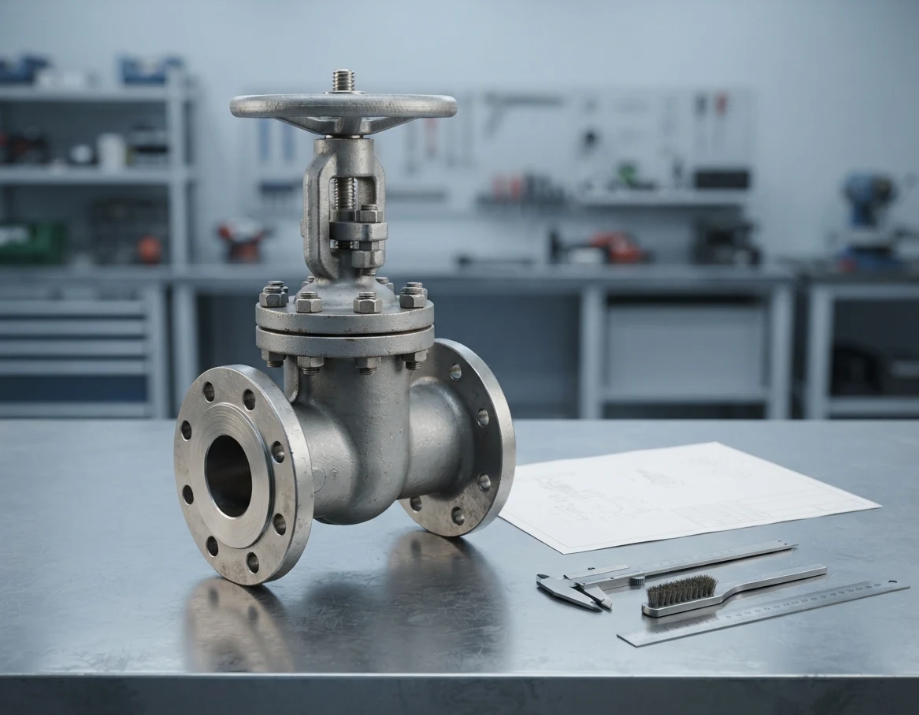
Obtain the approved design pressure and temperature rather than selecting from a routine gauge reading. Record the operating range and relevant startup, shutdown, upset and transient conditions identified by the project engineer. The governing cases should reflect the design basis; do not invent combinations of unrelated extremes or omit combinations that can actually occur.
For each case, identify which side can be pressurized and the differential pressure across the closed valve. Pressure-containing capability and the ability to open, close or achieve the required shutoff under differential pressure are separate checks.
If the process data are incomplete, collect the information needed to size an industrial valve before asking a supplier to finalize the selection. An estimated normal pressure is not a substitute for an approved design envelope.
Specify the body grade, bonnet arrangement, size, end connection and applicable standard and edition. Material descriptions such as steel or stainless steel are not sufficiently precise for a final rating check. Confirm whether the supplied design has any manufacturer-specific restrictions.
Use the authorized rating information for the proposed material and class at each governing temperature. Do not extrapolate outside a published table or use a rating from a different material group because the dimensions look similar. Have the responsible engineer resolve uncertainty about interpolation or code application.
Review seat construction, stem, packing, gaskets, bolting and actuator or gearbox limits. The assembly may have restrictions not apparent from a body rating alone. Ask the supplier to state both the pressure-temperature envelope and the allowable differential pressure for operation and shutoff.
Match flange standard, facing, drilling, gasket, bolting and dimensions to the piping class. For welding ends, check material compatibility, end preparation and the approved welding requirements. A valve with an adequate body rating is not automatically interchangeable with every flange or welded connection of the same nominal size.
| Check | Question to resolve | Evidence to request |
| Design conditions | Which pressure and temperature cases govern? | Approved line list and design basis |
| Body rating | Does this grade and class cover those cases? | Applicable rating table and manufacturer data |
| Complete assembly | Do trim, packing and operation impose lower limits? | Model-specific limits and configuration |
| Piping interfaces | Are connections and adjoining components compatible? | Piping class and dimensional drawings |
| Verification | What testing and documents are required? | Agreed inspection plan and quotation exceptions |
Use this checklist to organize a technical review, not as a replacement for a rating table. Record the source document and revision beside each decision so the selected configuration can be checked again when process conditions or materials change.
A class designation must be read with its material and temperature basis. Review industrial valve material selection when corrosion, low temperature, thermal cycling or other service concerns may affect the grade or sealing components. A higher class does not cure material incompatibility.
Likewise, a pressure-containing valve may require a different operator to move against the specified differential pressure. Ask for operating torque or thrust information appropriate to the model and service. Do not assume a handwheel, gearbox or actuator is correctly sized simply because it fits the valve mounting arrangement.
The gate valve working principle explains why gate travel, seating and flow conditions must be considered together. A pressure-class review should remain distinct from calculating flow capacity or predicting pressure loss through an open valve.
There is no universally correct extra class or percentage margin. Apply the governing code, owner requirements and engineering assessment rather than adding an arbitrary allowance.
No. Class is a designation. The applicable pressure rating depends on the standard, material, temperature and valve construction.
No. It may change dimensions, weight, cost and operating requirements without solving corrosion, unsuitable duty or inadequate sealing. Select for the actual design basis.
Not by a simple label conversion. Check the relevant standards, material-temperature rating and connection dimensions for the proposed components.
No. A specified test verifies particular acceptance requirements under defined conditions; it does not replace the design rating or operating limits.
Send KAIWEI VALVE the line size, medium, design pressure and temperature, operating cases, differential pressure, body and trim requirements, end connections and applicable specifications. Request a gate valve configuration review with the proposed model, rating basis, operator limits and any quotation exceptions clearly identified.
More News
Nov.26, 2026
Nov.26, 2026
Nov.25, 2026


