News
Sep.21, 2026
A ball valve is often a strong starting point for fast, frequent quarter-turn isolation, while a gate valve is often considered for infrequent full-open/full-closed service with a relatively unobstructed bore. An offset butterfly valve may suit compact or large-line installations. The best isolation valve depends on defined service and shutoff requirements.
When reviewing industrial valve products, use the required isolation function to narrow the options before comparing individual configurations.
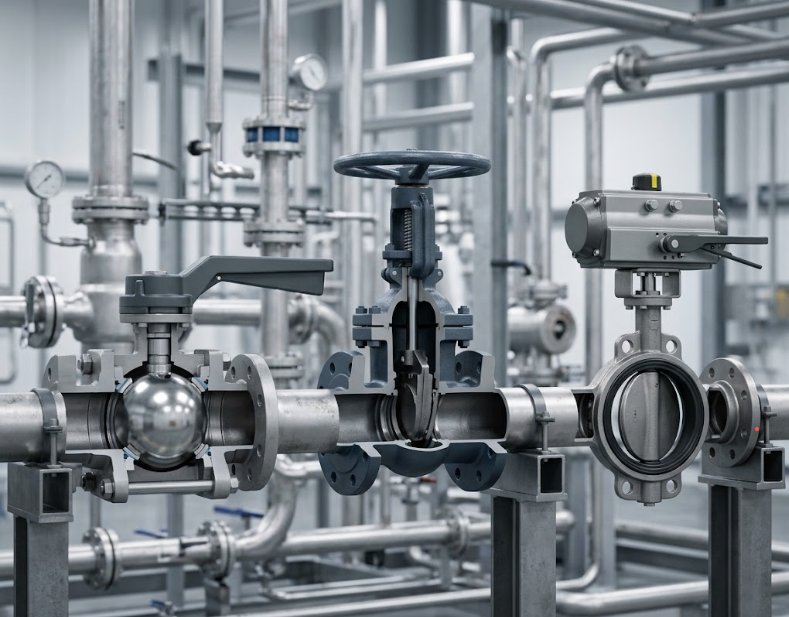
Isolation means separating equipment or a piping section by closing a valve, but the required performance varies. A utility line, process block valve, emergency shutdown valve, double-isolation arrangement, and maintenance boundary do not share one specification.
State the test standard, test medium, pressure, flow direction, allowable leakage, temperature, differential pressure, and whether the valve must isolate after cycling, fire exposure, solids, or long periods without movement. If double block and bleed, double isolation and bleed, or cavity-pressure relief is required, define the arrangement rather than assuming those terms are interchangeable.
A ball valve rotates a bored ball through 90 degrees. The short travel supports fast manual or powered operation. Full-bore designs can provide a passage close to the connected pipe bore, while reduced-bore designs intentionally use a smaller opening.
Ball support, seat design, cavity behavior, flow direction, torque, temperature, solids, decompression, and shutoff test basis all matter. A soft-seated ball valve should not be treated as universally suitable for high temperature, abrasive service, fire cases, or sustained throttling. A metal-seated design also needs a stated leakage criterion.
KAIWEI’s ball valve category lists current configurations as a catalog starting point. Request the exact model, seat design, port, pressure-temperature rating, torque, and test documentation for the project condition.
A gate valve raises its closure element out of the main flow path and lowers it onto the seats for isolation. When fully open, many designs offer a relatively unobstructed passage. The trade-offs include multi-turn operation, greater height for rising stems, and potential gate or seat damage if a conventional design is held partly open.
The TLV manual-valve guide notes that gate valves normally are not used to regulate flow and that fully open designs limit pressure drop. Wedge, parallel, rising-stem, non-rising-stem, bonnet, end connection, bypass, and actuator choices still require project review.
KAIWEI’s live gate valve page identifies available category entries, but the page does not by itself establish one common rating or shutoff level for every item.
A butterfly valve places a rotating disc in the flow path. Its short face-to-face envelope and rotary operation can be useful where space or valve weight matters. Concentric, double-offset, and triple-offset designs should not be treated as equivalent isolation valves.
Check disc position, seat construction, offset, pressure direction, flange compatibility, velocity, dynamic and seating torque, allowable differential pressure, and leakage basis. KAIWEI’s butterfly valve page lists concentric, wafer, and triple-offset starting categories; model-specific suitability remains subject to engineering confirmation.
| Criterion | Ball valve | Gate valve | Butterfly valve |
|---|---|---|---|
| Motion | Quarter-turn rotary | Multi-turn linear | Quarter-turn rotary |
| Flow path when open | Full or reduced bore | Gate generally withdrawn from bore | Disc remains in flow path |
| Operating speed | Generally fast | Generally slower | Generally fast |
| Installation envelope | Compact length; actuator space required | Stem/bonnet height can be significant | Short face-to-face |
| Main caution | Seat, cavity, torque, temperature, solids | Partial-open damage, stem clearance, cycling | Disc/seat design, direction, velocity, torque |
This table supports screening only. The selected product must meet the line’s pressure-temperature rating, material compatibility, leakage requirement, operating frequency, maintenance plan, and governing standard.
For a closer look at the first two options, review our ball valve vs gate valve comparison.
Provide fluid composition and phase, solids, minimum and maximum flow, normal and maximum differential pressure, design pressure and temperature, line size and schedule, required bore, flow direction, cycling frequency, stroke time, fail action, and available utilities. Include surge, fire, fugitive-emissions, pigging, buried-service, locking, and hazardous-area requirements when applicable.
ASME B16.34 addresses pressure-temperature ratings and other construction subjects for specified valves, but isolation performance also depends on the product standard, seat design, test method, and project specification.
Before ordering, ask your supplier to confirm the model, body and trim materials, seat construction, port or bore, pressure-temperature rating, leakage test, flow direction, torque and actuator basis, standards, certificates, assumptions, and exceptions.
Comparing ball, gate, or butterfly valves for isolation? Share your fluid, line size, pressure, temperature, cycling frequency, and shutoff requirements with KAIWEI VALVE to discuss the options and request a project-specific quotation.
More News
Oct.01, 2026
Sep.30, 2026
Sep.25, 2026


